

 The Magazine
No. 0226 October 2026
With an open heartTwo years to find my silverMedellín, eternal springAt my table: a diabetic who loves foodFrom uniform to white coat8,600 km, one call a day
The Affrenchy Magazine · No. 02
Monday 26 October 2026
With an open heart
Maritza tells the story of her transition to silver in photographs, shares what she eats as a diabetic and looks back on her years in the Navy. Juliana Sofía takes you to Medellín and remembers the young Colombian who arrived in France with one suitcase.
Open the issueIn this issue
- Editor's letterOur album, wide open
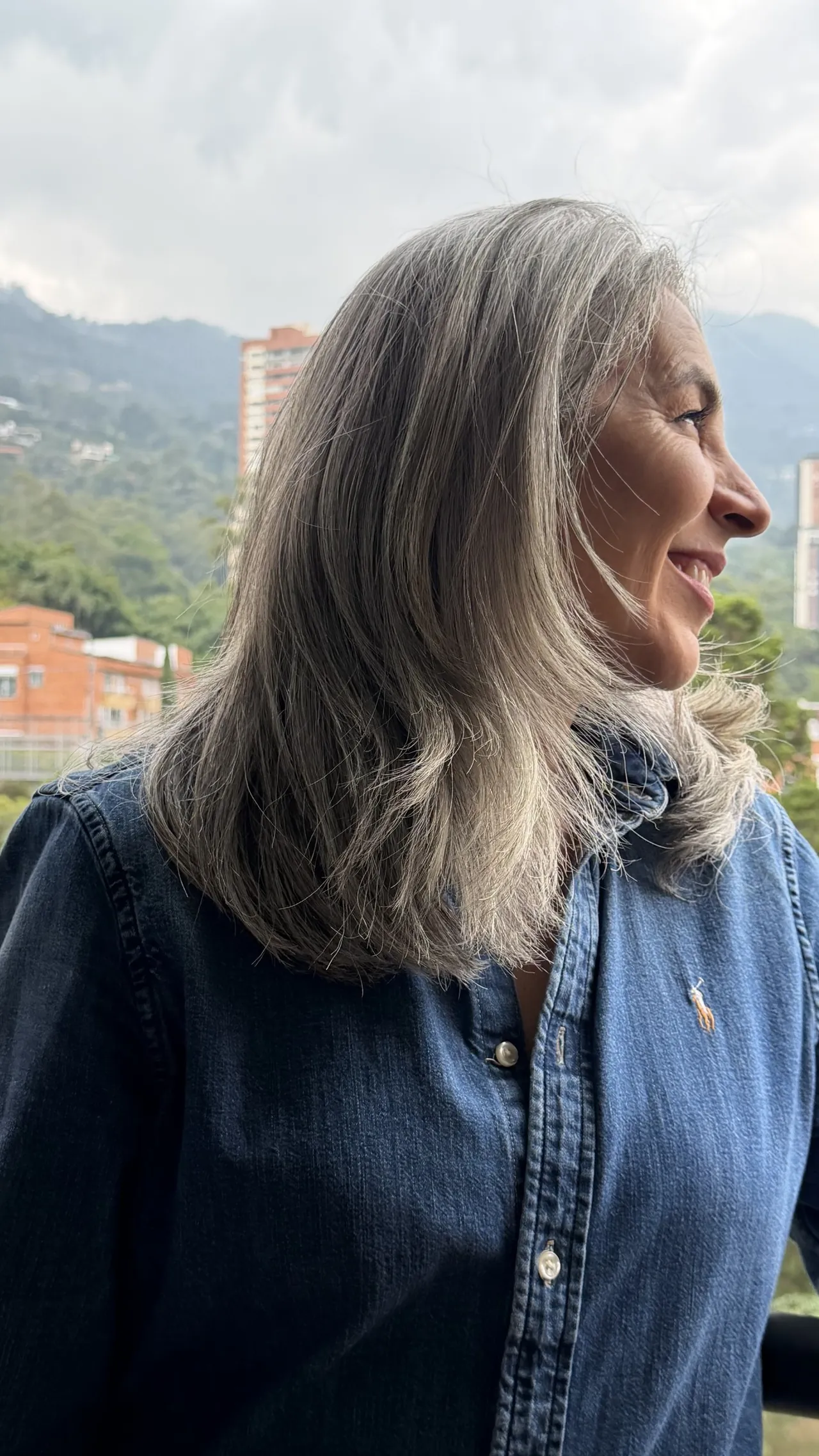 01The Silver CrownTwo years to find my silver
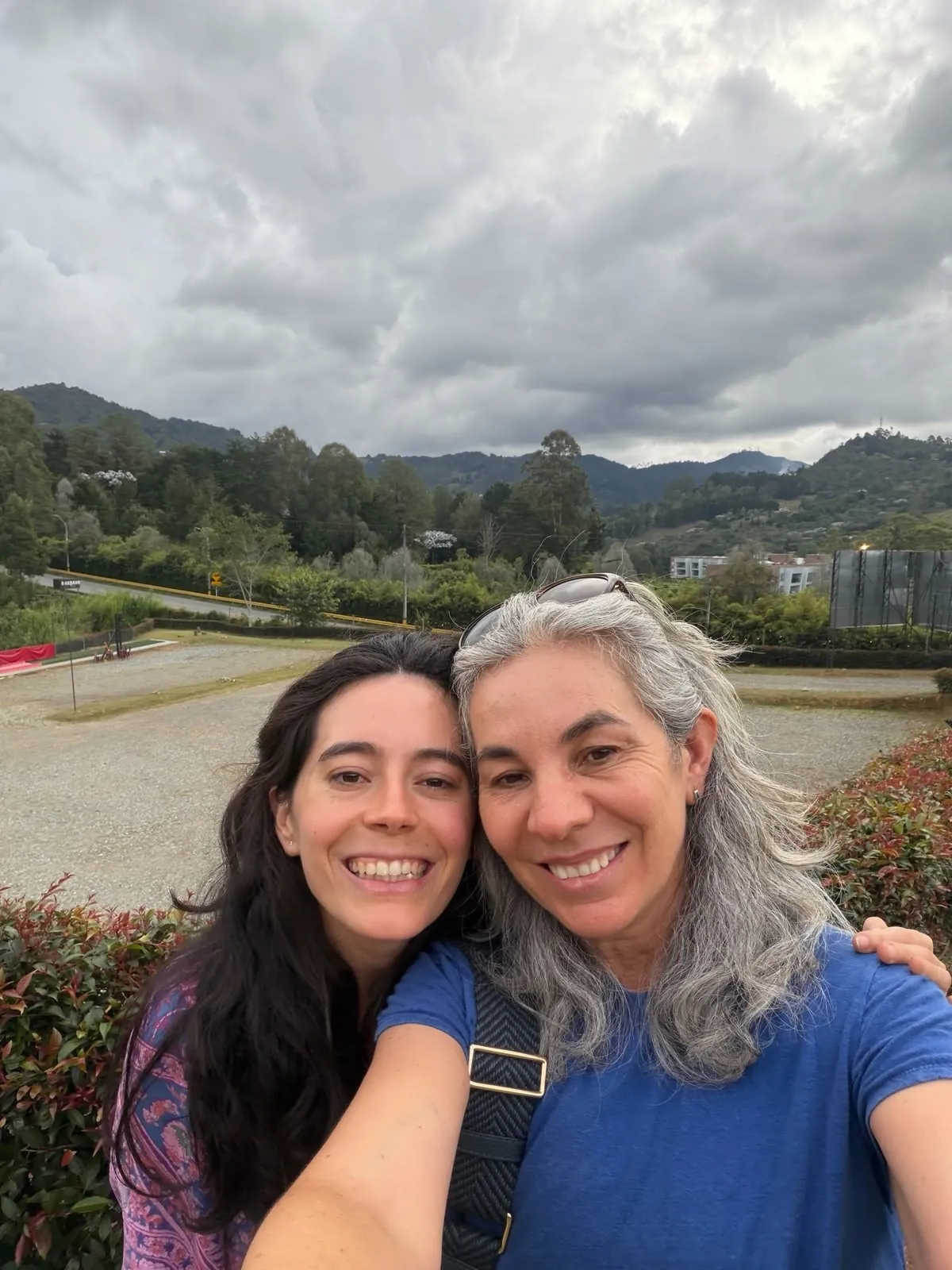 02Our City, Through Our EyesMedellín, my mother’s eternal spring
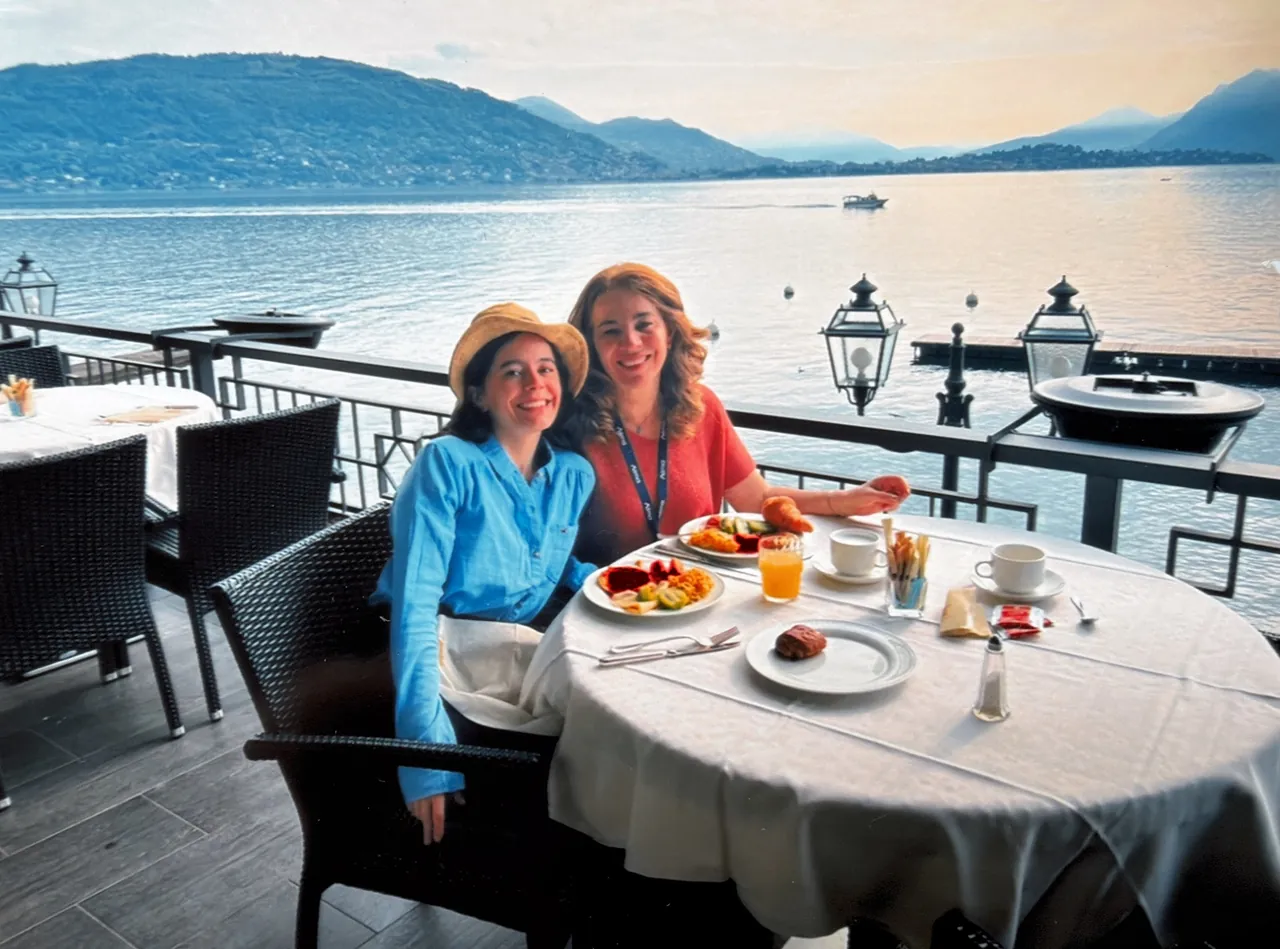 03The SanctuaryDiabetic and a food lover: at my table, day to day
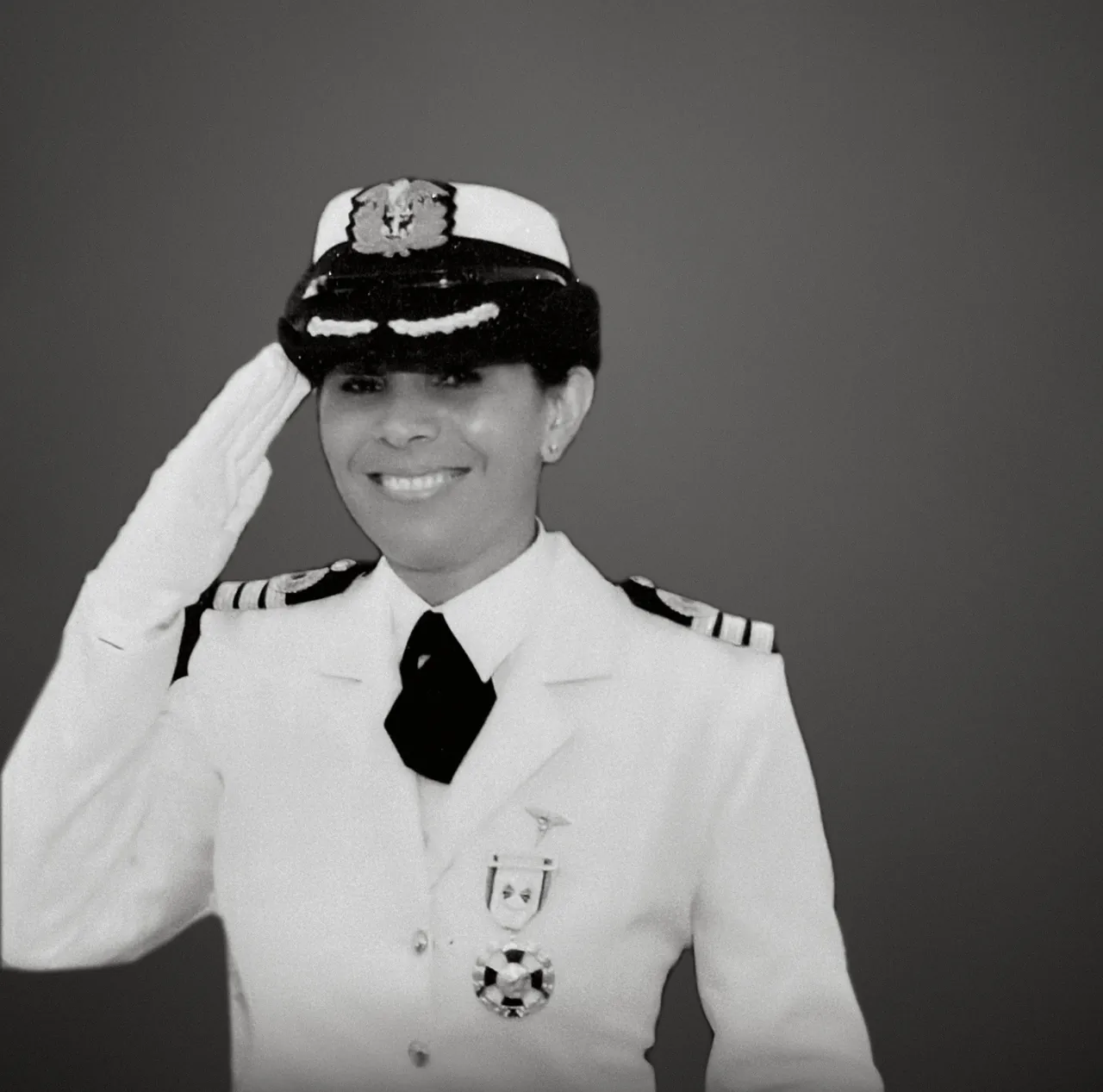 04A Life's PathFrom the white uniform to the white coat
 05Mother to Daughter8,600 kilometres, one call a day
Editor's letter
Our album, wide open
Dear readers, for this second issue, we have opened our family album. Every photo you will see here comes from our phones and our drawers: slightly blurry selfies, prints from the Colombian Navy, Apolo smiling at the camera. Every story is one we have lived.
My mother, Dr Maritza Flórez, writes for the first time about her transition to silver hair, from the day she put the hair dye away to this day. She also shares what she eats as a diabetic and tells of her years in the Navy. As for me, I take you to Medellín, her city, and I tell you about the young Colombian who arrived in France with one suitcase.
We chose to speak from the heart, because that is how we speak to each other, she and I, every day, 8,600 kilometres apart.
And you? Your story matters just as much. Tell it on The Affrenchys forum, or write to us at contact@affrenchy.com. With your permission, it could appear in a future issue.
With all my love,
Juliana Sofía
Co-founder of Affrenchy
The Silver Crown
Two years to find my silver
In July 2024, at Mont-Saint-Michel, I put the hair dye away. Here is my transition, month by month, in photographs.
By Dr Maritza Flórez · Dermatologist and trichologist
@dramaritzaflorez on Instagram
I found my first white hair at twenty-eight. Like many of you, I booked a colour appointment. Then colour became a habit, and the habit became a calendar: every two weeks, the roots had to be done again. Hours at the salon, a great deal of money, and that constant little worry of seeing the pale line reappear.
And yet I am a dermatologist and trichologist. I know what repeated colouring does to the hair fibre and the scalp. I knew it, and I carried on.
The turning point
 Mont-Saint-Michel, July 2024
In July 2024, I am travelling in France with my daughter, Juliana Sofía. We visit Mont-Saint-Michel and take photos, lots of photos. On the screen, I see my roots. I ask my daughter to put her phone away.
She looks at me, surprised. "Why?" Because you can see my roots, and it looks ugly. "Who said it looks ugly?" Everyone knows that. "Mum, what’s sad is spoiling your holiday for fear of what other people will think of your roots."
She was right. That day, on that rock in the middle of the bay, I decided to let my grey hair grow.
An aesthetic decision, and above all a decision for health and well-being.
A silver thread that goes back a long way
I remembered something my mother, Clarita, used to say: enhance rather than conceal. And my grandmother Elisa, who wore her white hair like a crown. In my family, the women have let their hair be its own colour. I had hidden mine under dye for years. It was time to pick up the thread.
Two years, and a great deal of patience
My hair fell below my shoulders, and hair grows about one centimetre a month. It took two years for the silver to reach the ends.
 Madrid, 2018
Colour
Before
 Paris, 2023
Blonde
Before
- Mont-Saint-Michel, July 2024
The turning point
Day 1
 Cartagena, January 2025
Regrowth
+ 6 months
 Paris, January 2026
Two tones
+ 18 months
 Barranquilla, April 2026
The last tips
+ 21 months
 Paris, July 2026
Silver
+ 24 months
 Medellín, October 2026
My crown
Today
The middle stages call for patience. There was the two-tone moment, when half your hair seems to belong to another woman. There were mornings when the urge to dye it again came back. Here is what helped me, as I experienced it:
- Change your hair care. A depigmented fibre behaves differently. I transformed my routine: gentle, nourishing treatments, and products that neutralise yellow tones, preferably natural ones.
- Nourish from within. Hair is made from what we eat: protein, iron, zinc. I invite you to my table a little further on in this issue.
- Protect from the light. White hair oxidises in the sun. A hat during the brightest hours, and a rinse in fresh water after the sea or the pool.
- Look with kindness. Every morning, the mirror showed a little more silver. I learned to look at it the way you watch a plant grow.
- Surround yourself with support. My daughter was my first ally. Choose yours: a friend, a sister, or The Affrenchys forum.
What I was told, and what I answered
Recently, a colleague asked me why I wore my hair this way: in his view, it added years. I answered him, calmly. It was the last time he asked.
For decades, we were taught that grey was a flaw to correct. Today, all over the world, women and men choose to wear their grey hair with pride. This movement invites us to be authentic and to love ourselves more. Beauty laughs at expiry dates.
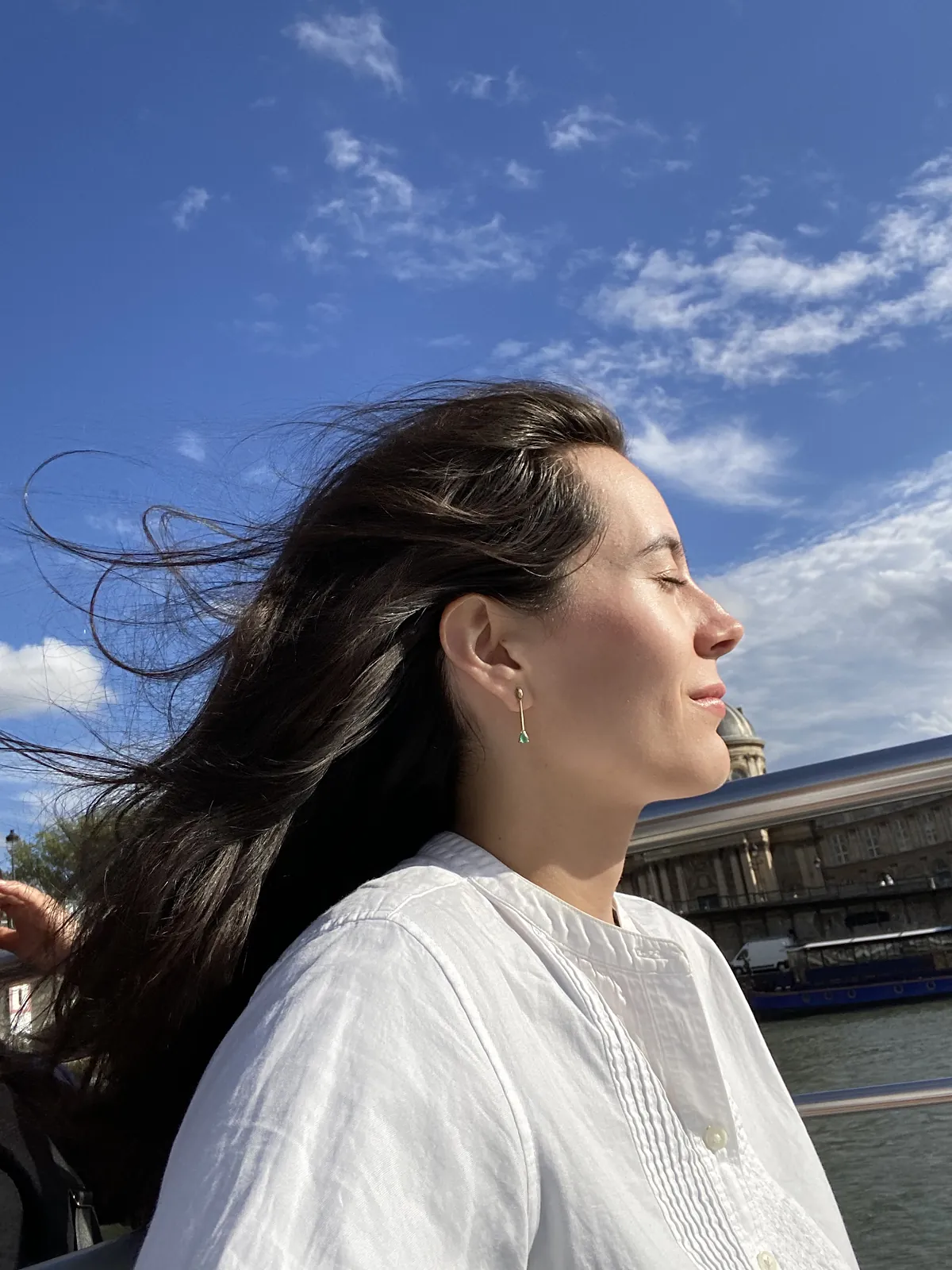
My hair is now fully silver. Wearing it this way has given me back time, money and a kind of peace. It connects me to my authenticity, and to the women of my family.
And you, where are you on your journey? At the very beginning, in the middle, already on the other side? Every stage deserves to be shared.
Our City, Through Our Eyes
Medellín, my mother’s eternal spring
The city where my mother lives, where I turned sixteen, where Apolo waits for us. Medellín, seen from home.
By Juliana Sofía · Co-founder of Affrenchy
@affrenchy on Instagram
Last week, I took you to Cartagena, the city of my childhood. This week, I open the door to Medellín. My mother was born in Bogotá, and Medellín is where she lives today, with Apolo. We arrived in 2017, after our year in Toronto. I was sixteen, and it was there that we founded her dermatology practice together.
The city of eternal spring
Medellín stretches along the floor of a valley, nearly 1,500 metres above sea level, between forested mountains. They call it the city of eternal spring: it is mild all year round, at about twenty-two degrees. So close to the equator, the days are the same length in every season. The sun rises around six, and sets around six.
So life starts early. In my family, we went to bed early and got up around five. My mother has kept that rhythm: her day begins with the light, and with Apolo.
Apolo, our Labrador
 With Apolo, Medellín, 2022
 Maritza and Apolo, 2025
Apolo is the family dog, a big cream-coloured Labrador convinced that the whole world is his friend. When I arrived in France, what I missed had faces: my mother, my father, my whole family, my friends, my language, and Apolo.
In Medellín, walking your dog also means talking with the city. The neighbours greet you by name, strangers stop: "¡Hola! ¿Cómo está?" You exchange a few words, a smile, news of the family. I often miss that human warmth in Paris.
Today, Apolo regularly joins our video calls. We remain convinced that he is one of the founders of this house.
Nature, within walking distance
 Out walking, Medellín, 2026
What I love about Medellín is having nature within walking distance. Greenery is everywhere: in the streets, on the balconies, on the hills. The mountains around the valley invite you to walk, and my mother loves hiking there, in a hat, at her own pace.
To get up into the hills, there is the Metrocable: cable cars connected to the metro, gliding over the neighbourhoods that cling to the slopes. One line climbs all the way to Parque Arví, a large forest reserve above the city.
And in the evening, go up to one of the miradores, the viewpoints overlooking the valley. As night falls, Medellín lights up one neighbourhood after another, and the whole city sparkles between the mountains.
A city in bloom, a curious city
Every August, the Feria de las Flores fills the streets: the silleteros parade with immense flower arrangements carried on their backs, a tradition handed down from the farmers of Santa Elena, high above the city.
In the north of the city, Parque Explora awakens the curiosity of young and old alike. This interactive science museum is home to the largest freshwater aquarium in South America, and to hundreds of species from Colombian waters. The Botanical Garden is right next door, so you can carry on your visit in the shade of the trees.
If you come to Medellín
- The Metrocable, to see the valley from above, all the way to Parque Arví.
- A mirador at sunset, to watch the city light up.
- Parque Explora and its aquarium, then the Botanical Garden, side by side.
- The Feria de las Flores, in August.
- A coffee from Antioquia, with a warm arepa.
A family, mountains, and a city that loves dogs
 Medellín, 2024
For me, Medellín is first and foremost faces: my mother, my family, the neighbours who ask how everyone is. It is green mountains on every street corner. And it is a city that loves dogs.
In Colombia, nearly two households in three have a pet. Medellín has made the well-being of animals a point of pride: its animal protection centre, La Perla, is the largest in the country. It cares for more than two thousand dogs, and between January and July 2025, nearly a thousand animals found a family there.
Apolo has his: us. Every time I come home, my mother is waiting for me, and Apolo with her.
The Sanctuary
Diabetic and a food lover: at my table, day to day
I am diabetic, and I love to eat. Here is how I organise my days, from my morning green juice to my six o’clock protein.
By Dr Maritza Flórez · Dermatologist and trichologist
@dramaritzaflorez on Instagram
I am diabetic. I say so here plainly, because many of you are too, or live with someone who is. Diabetes taught me to look at my plate as a doctor. I still look at it as a food lover.
Hippocrates is credited with an idea I make my own every day: your best medicine is food. What I eat matters, and the order in which I eat it through the day matters just as much.
In the morning, fibre first
The first thing I eat each day is fibre: a green juice blended with all its fibre, vegetables sautéed with my eggs, a whole piece of fruit, oats, chia or flax seeds.
Fibre feeds the good bacteria in the gut and slows the absorption of sugars. Blood sugar then rises gently, instead of shooting up all at once. For a diabetic, that stability changes everything. For the skin too: repeated blood sugar spikes keep inflammation going.
The first thing I eat each day is fibre. The last, around six, a good protein.
On the plate, order matters
At lunch, I start with vegetables, continue with protein and finish with starches. This simple order helps blood sugar stay steady after the meal. I eat fruit whole, with the skin on when possible: its fibre does the work.
In the evening, a good protein, early
Around six, my last meal is a good-quality protein: fish, eggs, chicken, lean meat, or the pulses of home (lentils, red beans, chickpeas).
Protein provides the amino acids the body uses to make the keratin in hair and nails, and the collagen in skin. Eating dinner early leaves time for digestion before sleep, the moment when skin and hair repair themselves.
My Colombian cooking, adapted
 At the table, Medellín, 2018
I keep the flavours of home. Red beans, los fríjoles, are a treasure trove of fibre and protein. The arepa stays on the menu, in a small portion, with an egg and avocado. And hogao, the sauce of slow-cooked tomatoes and onions that perfumes Colombian cooking, gives flavour to almost everything.
After the meal, I walk
Ten to fifteen minutes of walking after a meal helps the muscles use the sugar in the blood. In Medellín, I have the best of companions: Apolo.
Coffee, in moderation
I love coffee, like many Colombian women. One cup, sometimes two, and I pay particular attention to what comes with it: sugar and pastries often weigh more heavily than the coffee itself.
Every case of diabetes has its own story, and every person their own context. Your eating plan is something to build with your doctor. What I share here is what is on my table, and what works for me.
This week’s recipe
Lentils with lemon are among my favourite dishes: fibre, protein, iron, and the vitamin C in the citrus, which helps the body absorb that iron. I make them with a hogao, the Colombian way.
A Life's Path
From the white uniform to the white coat
More than twenty years in the Colombian Navy, as a doctor and then a Navy Captain. What the sea, the sun and discipline taught me.
By Dr Maritza Flórez · Dermatologist and trichologist
@dramaritzaflorez on Instagram
As a little girl in Bogotá, whenever someone asked me what I wanted to be, I answered at once: a doctor. My mother, Clarita, always encouraged me to pursue my dreams. At sixteen, I started medical school.
The Navy, my second school
 Young officer
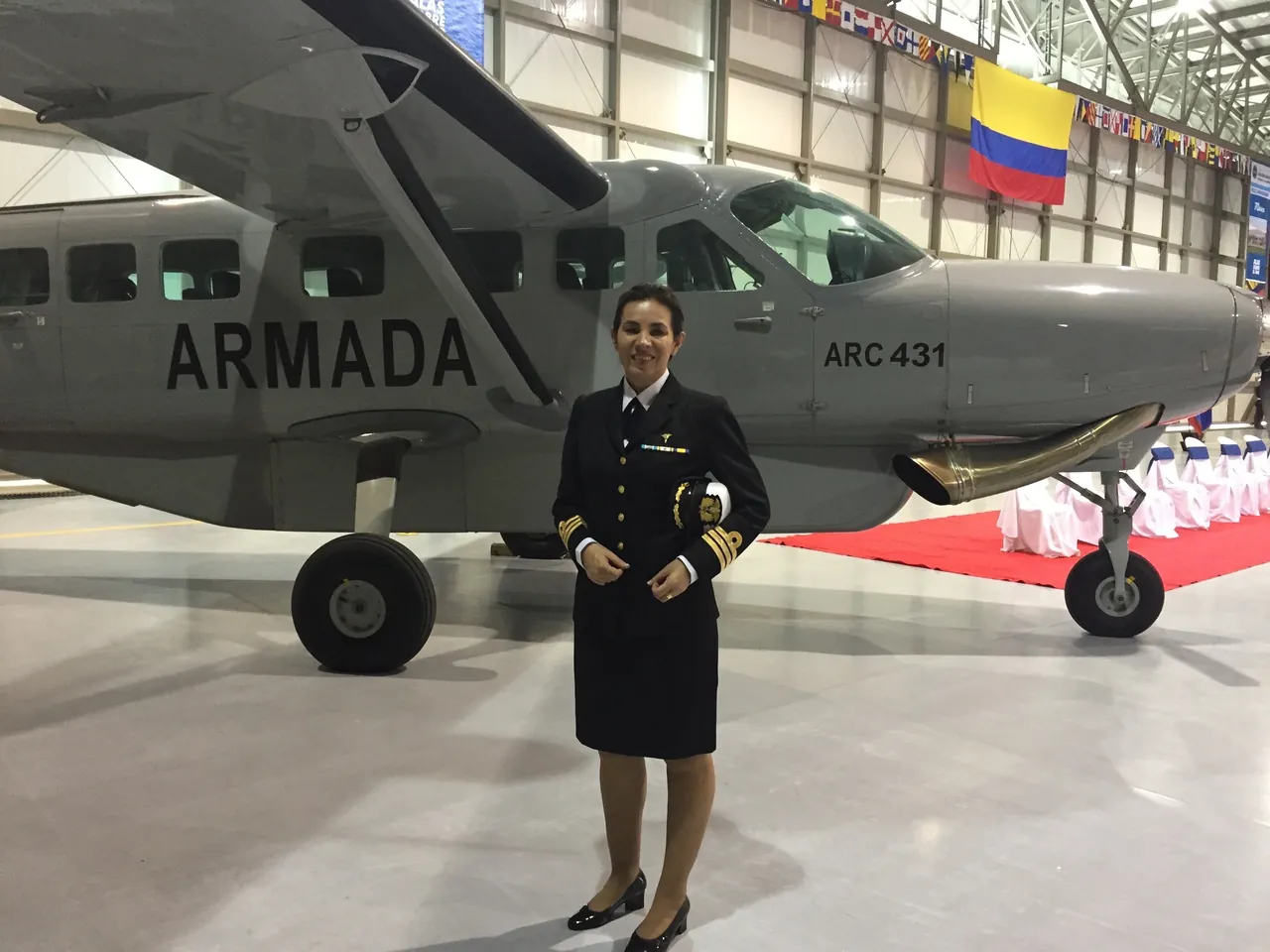
As a young doctor, I joined the Colombian Navy. There I learned rigour, punctuality and a sense of service. I also had experiences few doctors ever have: field training, my face painted with camouflage, diving, ceremonies in white uniform under the Caribbean sun.
 In training
 Diving
It was also in the Navy that I met Mario, my daughter’s father. He was a military man too.
Caring for skin under the Caribbean sun
 Navy doctor
I specialised in dermatology, and for more than ten years I headed the dermatology department of the Naval Hospital in Cartagena.
In Cartagena, the sun shines all year round. My patients, sailors, servicemen and families, lived by the sea, exposed to light, salt and heat. I saw up close what light does to skin and hair, day after day. It is a lesson I pass on today at Affrenchy: white hair, being depigmented, needs particular protection from the light.
Twenty years in a bun
 Ceremony, Barranquilla, 1997
All those years, my hair lived under a cap, pulled into an impeccable bun. And already dyed. Today, it falls over my shoulders, fully silver.
I retired with the rank of Navy Captain, after more than twenty years of service.
Toronto, then Medellín
When I retired, I left for Toronto with Juliana Sofía, who was fifteen. She started high school; I studied languages and took further courses for my career. Far from our family, in a new country, we became inseparable.
Then we went home to Colombia, to Medellín. In 2017, with my daughter, who was sixteen, I founded my practice, Maritza Flórez Dermatólogo. There I compound my own prescriptions, tailor-made for the skin and hair of each patient.
 Medellín, 2026
What stayed with me from the Navy
Twenty-two years of practice later, three things from the Navy have stayed with me. Discipline, which helped me through two years of hair transition. A sense of service, which makes me love every consultation. And the certainty that a woman belongs everywhere, in uniform or in a white coat.
My white coat has replaced the uniform. And my hair has returned to its original colour: silver.
Mother to Daughter
8,600 kilometres, one call a day
Juliana Sofía in Paris, Maritza in Medellín. Two voices on the distance between us, and everything that brings us closer.
By Maritza and Juliana Sofía
@affrenchy on Instagram
Between Paris and Medellín, there are 8,600 kilometres, an ocean, and a time difference of seven hours in summer, six in winter. Since January 2020, that has been the distance between a mother and her daughter. And every day, a phone call crosses it.
Juliana Sofía: one suitcase and a childhood dream
 Paris, 2026
As a little girl, whenever someone asked me what I would do when I grew up, I answered: live in Paris. In June 2018, my mother and I took our first trip to France together. On 14 January 2020, I came back alone, with one suitcase. I thought I would go home to Colombia six months later, by Christmas at the latest.
Then Covid arrived. I spent the first lockdown in Grenoble, where I was learning French at the university’s French language centre. In all, I spent more than two years away from my mother, and nearly three away from my father and my country.
I wanted to study foreign languages. I had chosen German, with a single word to my name: danke. My application was turned down, and the answer came late, in the middle of lockdown, as enrolments were closing everywhere. I wrote to every university in France. The law faculty in Nantes said yes.
I called my mother, then my father. He was especially happy: studying law had been his own dream, before the Navy.
Two years later, with my first law diploma in hand, I heard from a friend about the parallel admission route into business schools. I sat the entrance exam and joined SKEMA Business School. This summer I graduated from the Grande École Programme, with a double degree, an MSc in Corporate Financial Management. At sixteen, I had co-founded my mother’s practice with her, and I have overseen its strategy ever since: these studies gave that passion its tools.
France taught me the seasons. In winter, many people leave for work before sunrise and come home after sunset: for a Colombian used to equatorial days, that was a discovery. I also learned to reinvent my cooking with other ingredients, and to relate to people in another way, more reserved, more independent. Simply different.
Maritza: seven hours, and one call a day
 Nantes, 2022
When my daughter left, I supported her with all my heart: this dream had been hers since childhood. We thought we would see each other again a few months later. The pandemic dragged on, the borders closed, and for more than two years I held my daughter in my arms through a screen.
So we invented our ritual: one call, every day. I get up early; in Paris, it is already afternoon. We talk about everything: her studies, my patients, what we ate, the weather on each side of the ocean. Apolo often comes to say hello on the screen.
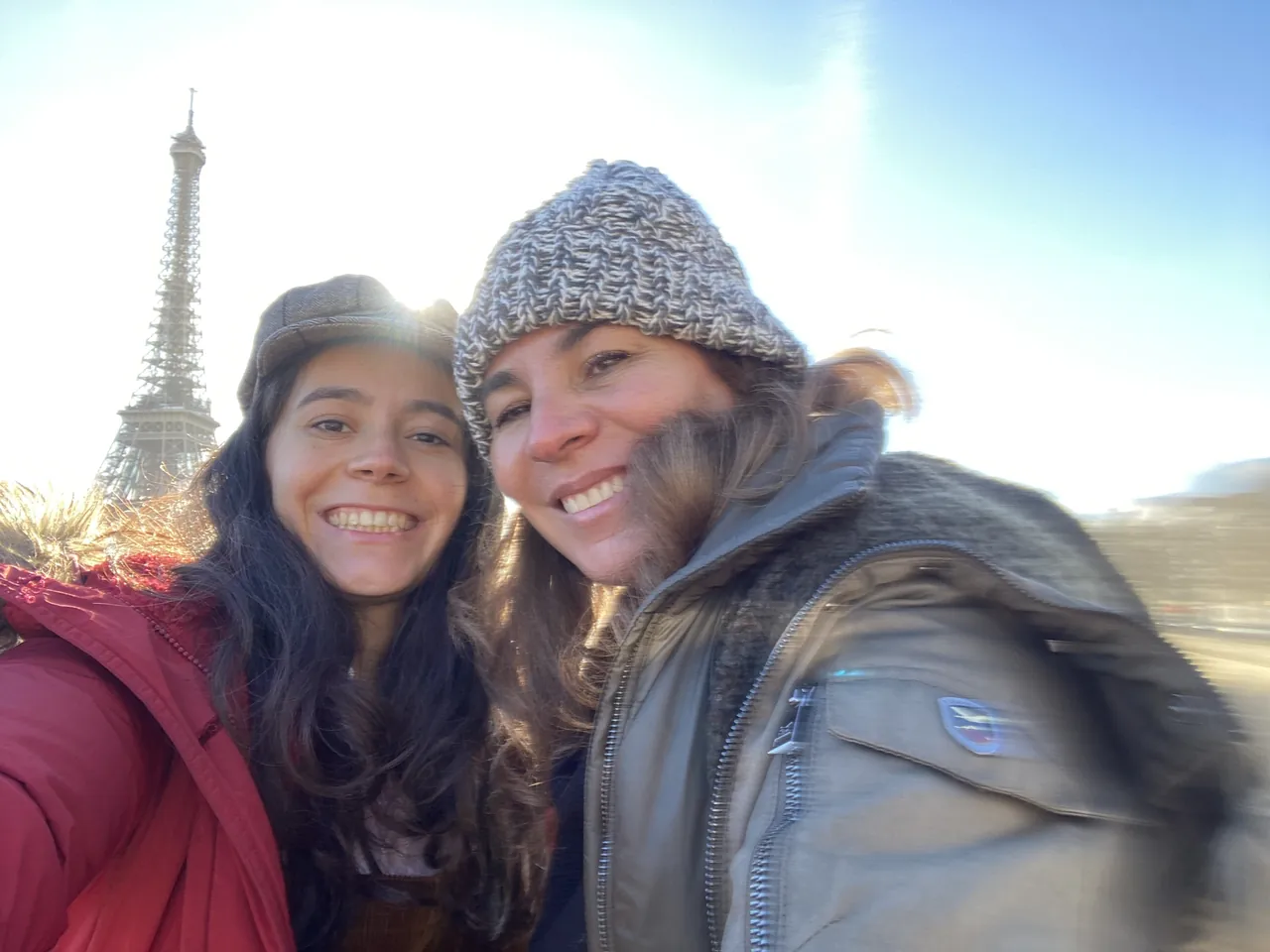
On 5 February 2022, I was reunited with my daughter in Paris. We took a selfie at the foot of the Eiffel Tower, our heads together. Then we travelled together to Istanbul and Cappadocia, and I discovered Nantes, the city where she was a student.
 Istanbul, 2022
 Cappadocia, 2022
Being the mother of a daughter who lives far away means learning to love differently. I let her build her life, and I stay present, every day, in my own way.
Together: what keeps us close
Since then, we have met several times a year, in Paris, in Medellín or elsewhere: the travel album on our website already includes thirty cities. Here are our habits, in case you too love someone who lives far away.
- A fixed appointment. The same time every day, even if only for five minutes. Regularity counts for more than length.
- Share the everyday. A photo of the market, the sky, the dog. Little things strengthen the bond.
- The next trip. Plan it as soon as the last one ends: a date to look forward to changes everything.
- The same recipe, the same day. The lentils with hogao from this issue, for example, cooked on both sides of the ocean.
- Words. At a distance, they count double. Tell each other things.
For us, distance has taken on another meaning: it measures everything we have to tell each other.
And you, do you live far from a mother, a daughter, a son? Tell us how you keep the bond alive.
The Affrenchys
The issue closes, the conversation begins
In The Affrenchys forum, every section continues: your questions about silver hair, your recipes, your travels, your reading.
Enter the forumFirst visit?
Join The Affrenchys
Issue No. 03 comes out on Monday 2 November 2026, straight to your inbox.
It's free, and it takes a minute.
- The Affrenchy Magazine in your inbox, every Monday.
- The Affrenchys forum: talk with the other members, ask your questions, share your journey.
- A private, caring community: grey hair, natural beauty, longevity.
Affrenchy, every day
Behind the scenes of the house, Dr Maritza Flórez’s advice and the life of The Affrenchys, every day:
The Affrenchy Magazine · No. 02 · 26 October 2026. Publisher: Juliana Sofía Bernal Flórez. Science section: Dr Maritza Flórez, dermatologist and trichologist. Photographs: from the family album of Maritza and Juliana Sofía.
This magazine informs and inspires. For any personal situation, your doctor remains your best ally.